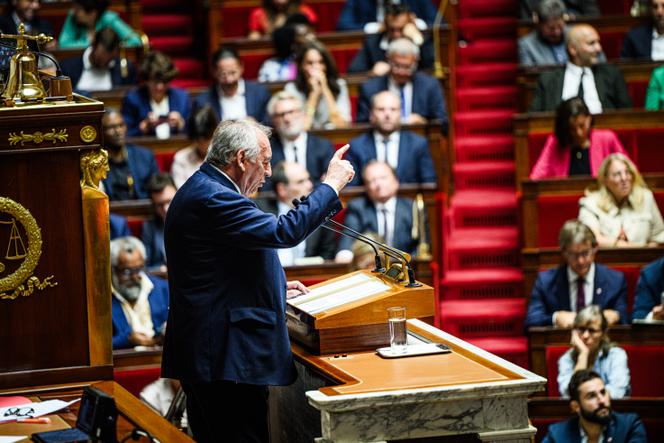
France's excessive debt pile is "life-threatening" for the country, Prime Minister Francois Bayrou said Monday, September 8, as he defended billions of euros of budget cuts ahead of a confidence vote expected to bring down his government. Defending his decision to call the high-risk confidence vote, Bayrou told the Assemblée Nationale: "The biggest risk was not to take one, to let things continue without anything changing (...) and have business as usual."
Bayrou, who has been in the job for just nine months, blindsided even his allies by calling a confidence vote to end a lengthy standoff over his austerity budget, which foresees almost €44 billion ($52 billion) of cost savings to reduce France's debt pile. Opposition parties across the board have made it clear they will vote against his minority government, making it highly improbable he will get enough backing to survive – he needs a majority of the 577 MPs in the Assemblée Nationale.
Bayrou is the sixth prime minister under President Emmanuel Macron since the head of state was first elected in 2017. Bayrou's ousting would leave the French leader with a new domestic headache at a time when he is leading diplomatic efforts on the Ukraine war.
Describing the debt pile as "life-threatening" for France, Bayrou said his government had put forward a plan so that the country could "in a few years' time escape the inexorable tide of debt that is submerging it."
"You have the power to overthrow the government," but not "to erase reality," Bayrou told the MPs.
'There are worse things in life'
Bayrou himself appeared to acknowledge that his time has run out. "There are worse things in life than being at the head of a government and seeing that government overthrown," he told the news website Brut on Sunday. According to officials, he had invited his ministers for farewell drinks Monday evening.
Bayrou would be the second French prime minister in succession to be toppled by Parliament, after Michel Barnier was ejected in December after only three months in office. The vote will force Macron to face one of the most critical decisions of his presidency: appoint a seventh prime minister to try to thrash out a compromise, or call snap elections in a bid to have a more accommodating Assemblée. There is no guarantee an election would result in any improvement in the fortunes of Macron's centre-right bloc in parliament.
While the Socialists far expressed readiness to lead a new government, it is far from clear if such an administration could survive.
Addressing the crisis after an international summit on Ukraine last Thursday, Macron called on France's political forces to demonstrate "responsibility" and ensure "stability."
Alongside political upheaval, France is also facing social tensions. A movement calling itself "Block Everything" is calling for a day of action on Wednesday, and trade unions have urged workers to strike on September 18.