French Prime Minister François Bayrou was not mistaken when he likened the challenge to a "Himalaya." The chorus of protests that greeted his budget announcements on Tuesday, July 15, revealed his exposure to the same risk as his predecessor Michel Barnier: a possible autumn no-confidence vote that could plunge the country back into political instability and financial fragility.
Frequently described as procrastinating or swerving, the prime minister nonetheless took a risk. At a press conference titled "The Moment of Truth," he made dramatic remarks about a country in a "life-threatening situation" and announced a €43.8 billion recovery plan for 2026. The staging was intended to make an impression and push for a halt to the uncontrolled rise of the nation's public debt. Two measures stood out amid the €20.8 billion clampdown on budgetary and welfare spending and €10 billion increase in tax revenues: a "blank year" freezing income tax brackets, pensions and social benefits; and the elimination of two public holidays.
In the wake of President Emmanuel Macron's address to the armed forces on Sunday, July 13, the prime minister sought to provoke a shock in public opinion by invoking the particular challenges facing the country at present and the loss of sovereignty France risks in an increasingly brutal and competitive world. Bayrou has railed against excessive debt since 2007, so his stance required no change in character. Compared to the 2025 budget, which Barnier had to hastily assemble through blind spending cuts, Bayrou's bitter pill at least has the virtue of linking the need to control debt with the need to revitalize production, so that the nation can maintain sustainable public spending, protect itself and stay competitive.
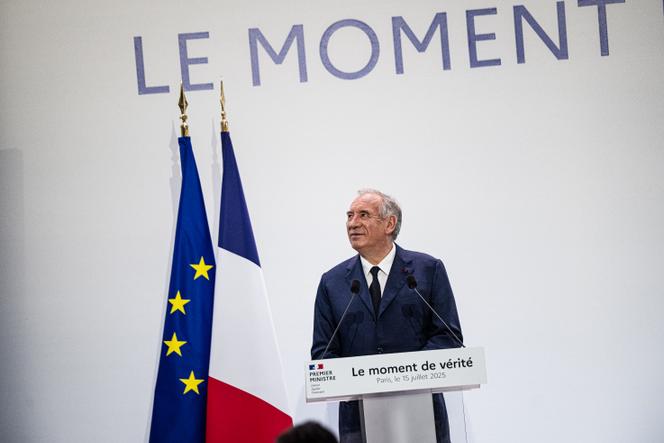
To put all chances of success on his side, Bayrou insisted he wanted to "act with fairness and justice." Doing so is essential, given the sacrifices being demanded of the majority of the French. At this stage, however, the share being asked of the wealthiest citizens and companies is still too vague to be convincing. The prime minister also wants to enter into a sort of quid pro quo with businesses, offering to "lighten and simplify" bureaucratic procedures in exchange for a reduction in government aid and subsidies. Here again, the scale of this overhaul remains unclear.
A plan that needs refining
The other area of vulnerability is the announcement of new restrictions on unemployment insurance, even as more than 450,000 job vacancies remain unfilled. Understandably, this project has angered labor unions, whom the prime minister had previously sought to bring back into the fold. Recent years have brought a series of reforms to the organization managing France's unemployment insurance, each replacing the last before the effects could be assessed. As the economy slows, this latest tightening feeds the perception that the government always targets the same groups, while businesses, still reluctant to hire people over 50, should have a share of responsibility.
The announced plan is a draft and needs further work. Even though the Socialists called the initial proposals "brutal and unacceptable," the prime minister intends to prioritize discussions with them, to avoid being left at the mercy of the far-right Rassemblement National. The goal is to win the battle for responsibility, after the unconvincing display in the Assemblée Nationale in recent months. Success will depend on whether the final version of the budget truly reconciles efficiency with fairness.